
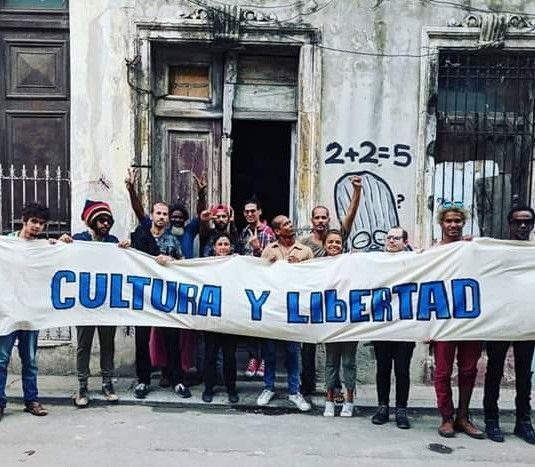

Too many times, a new process of transformation has been announced that ends up being merely a change of tone, a reversible concession…
By Yoani Sanchez (14ymedio)
HAVANA TIMES – Rare is the day with no new speculation about supposed negotiations between Washington and Havana. The rumor spreads through digital portals, seeps into conversations at the bodega, and resurfaces, with embellishments, on social medio. On the streets of Cuba, people ask if it’s true that the two governments are talking and that a roadmap for a democratic transition on the island will soon see the light of day. However, the rumors advance on one track while stubborn reality only regresses on another.
We Cubans have learned to be wary. Not out of cynicism, but out of experience. Too many times, a new process of transformation has been announced that ends up being merely a change of tone, a reversible concession, or a promise that evaporates in a few weeks. If real talks are taking place, if these aren’t just trial balloons floated to gauge reactions, then they should be accompanied by clear, visible signs and, above all, irreversible steps toward freedom.
The first of these necessary movements needs no embellishment or euphemism: the release of all political prisoners. More than a thousand people are currently imprisoned in Cuba for thinking differently, demonstrating peacefully, or publishing an inconvenient text on the internet. This is not about temporary releases, parole, or disguised exile, but about a full amnesty, without threats or subsequent surveillance. Until every last prisoner of conscience remains behind bars, any dialogue will be nothing more than a charade.
Another indispensable proof would be the genuine decriminalization of dissent and the dismantling of the political police apparatus. Cosmetic legal changes are not enough if citizens continue to know that expressing an opinion can cost them their job, career, or freedom. Without this framework of fear, built on summonses, hate rallies, and coercive legal proceedings, there is no honest transformation, only a charade.
We must also address the core of power: the end of the Single Party and the calling of pluralistic elections. Not as a distant gesture, promised for some vague future, but as a commitment with a clear timeline and rules. A transition cannot be constructed with only one player on the board. And for these elections not to be an empty charade, public media must open itself to divergent voices, allowing different political options to campaign before the citizens. The day we see an opposition candidate explain their platform on state television, we can begin to say that something is truly changing on this island.
On the economic front, an irreversible step would be to end the absurd prohibition that prevents doctors, lawyers, and other professionals from practicing freely in the private sector. No country can rebuild itself by tying the hands of its human capital. Similarly, the practice of politically motivated immigration “regulations,” which turn the right to travel into a privilege conditioned on obedience or silence, should be eliminated.
Finally, no Cuban transition will be complete if it ignores the exile community. Calling on those who left, and their children, to rejoin national political life and the reconstruction of the country is not a concession, it is a necessity. Cuba is also that diaspora that sends remittances, contributes ideas, and preserves our memory.
If conversations are happening and aspire for more than just gaining time, these will be the signs. Everything else, however seductive it may sound, will remain mere noise amidst a prolonged stagnation.
Translated by Translating Cuba.
Read more from Cuba here on Havana Times.