

By Safie M. Gonzalez
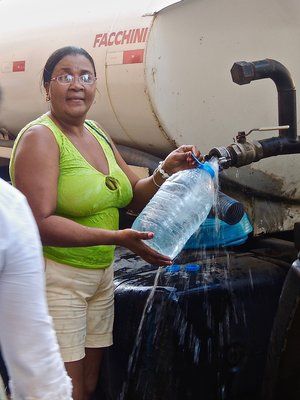
HAVANA TIMES – In this house, water is a luxury, as it is in many homes. Water does not come out when you turn on the tap; it does not accompany the daily routine; it is not there when it is needed. It arrives when it arrives, and in the meantime, we wait. Its unexpected arrival organizes the day, the body, and the mood.
When they announce it — if they announce it — everything stops. Buckets, bottles, and pots are gathered; any available container will do. Priorities are calculated: first fill what is essential, then see if there is enough to wash clothes, to do the dishes, to bathe. Not a single drop can be wasted. In this family, no one wastes the precious liquid, nor do we let our guard down.
The water that arrives is not always clear. Sometimes it carries dirt, rust, and an indefinable smell. Even so, it is collected and given a homemade treatment so it can be used: it is left to settle, boiled, and strained. Then it is passed through a filter and stored. Because there is no certainty about when it will return. The time without water in some apartment buildings can last more than a week — in others, even longer.
The water shortage does not only affect hygiene. It affects one’s temperament. The exhaustion builds when you have to carry buckets up dark staircases, when you postpone a shower, when you ration every everyday gesture. Washing your hands stops being automatic. Bathing becomes an act of saving.

Meanwhile, life goes on. People cook, work, and sleep. What should be exceptional becomes normalized. In a country surrounded by water, the paradox is constant: water is lacking inside homes, but resignation overflows.
Some people organize with their neighbors, others depend on water trucks, others simply wait. There is no loud protest, only adaptation. Scarcity becomes part of the routine.
Living without water is not just a technical problem. It is a form of daily wear, an experience that shapes the way one inhabits space, time, and one’s own body. And no realistic solutions even appear on the horizon; continuing to wait for water will remain part of everyday life.
Read more from Safie M. Gonzalez’s diary here.