

By Deutsche Welle (Confidencial)
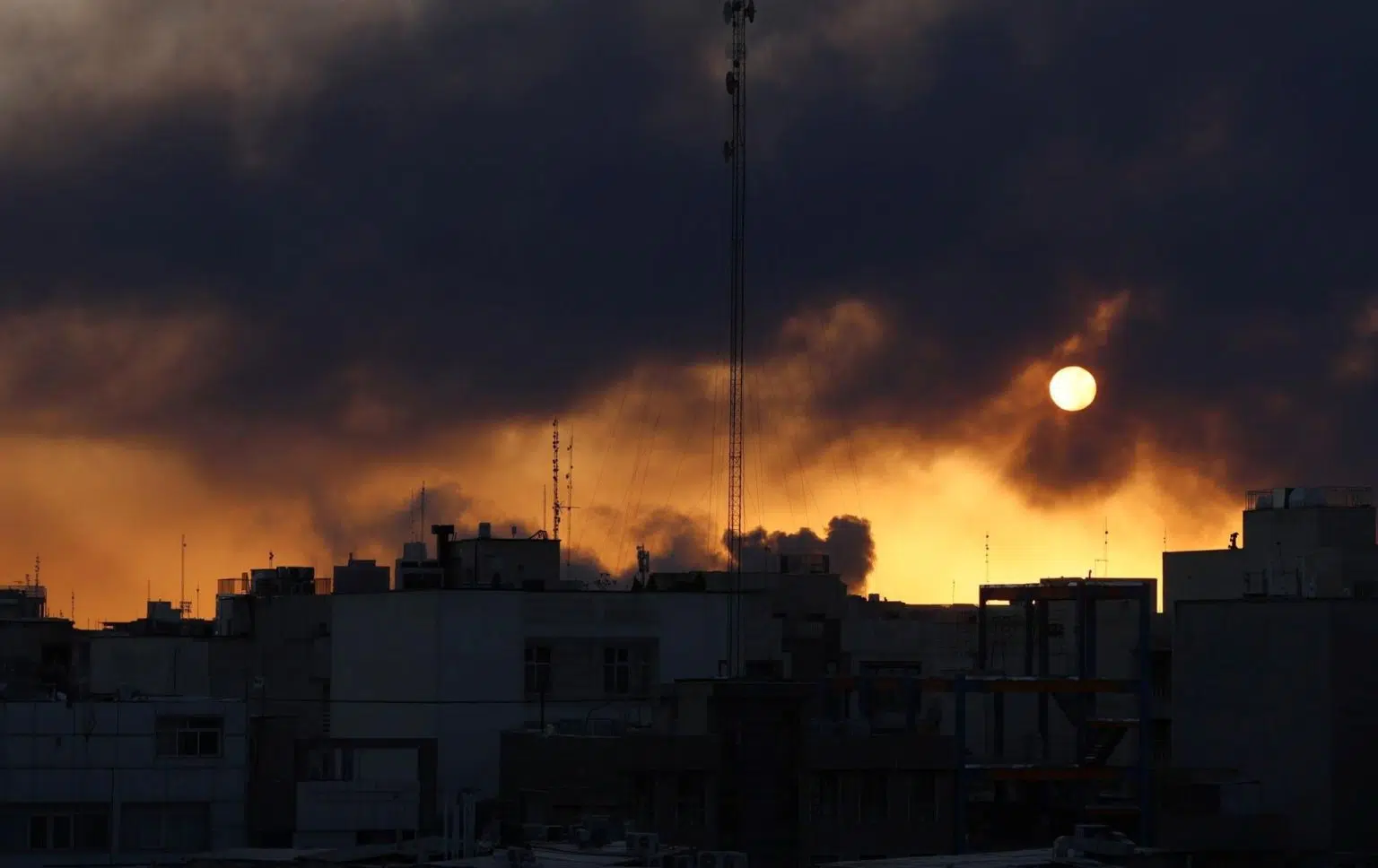
HAVANA TIMES – As bombs fall and Iranian leaders die, the rules meant to limit war appear weaker than ever.
Was the US-Israeli attack on Iran legal under international law?
UN Secretary-General Antonio Guterres has condemned the current offensive against Iran launched by the United States and Israel on February 28, 2026. He cited the prohibition in the United Nations Charter against using force against another country and said the attacks were “a grave threat to international peace and security.”
“I think most international law experts would agree that there is no legal justification for this. It is a violation of the United Nations Charter,” Gissou Nia, a human rights lawyer and director of the Strategic Litigation Project at the Atlantic Council, told DW. “We are facing an attack against Iran that is obviously not legal under international law nor under the United States’ own laws governing how it enters war.”
However, Nia added, the international legal system has also failed to “provide justice for the 92 million Iranians, many of whom have suffered violations of international law and atrocious crimes committed against them by the Iranian regime for 47 years.”
This is not the first time the legality of US military operations has been questioned. Unlike previous wars, such as the invasion of Iraq in 2003, this time the US government does not appear even interested in convincing the world that it is acting in accordance with international law. “I don’t need international law,” Trump said in an interview with The New York Times on January 7, 2026, adding: “I don’t intend to hurt anyone.”
Can the United States and Israel claim self-defense to justify their attack on Iran?
US and Israeli authorities have argued that they were acting against Iranian threats, particularly the danger that Iran might produce and use a nuclear weapon. Experts, however, say it is unclear whether those threats were urgent enough to meet the strict UN standards for self-defense.
According to Article 51 of the United Nations Charter, a state may use force in self-defense only after an armed attack. A broader interpretation of international law also allows the use of force against an “imminent threat,” although this interpretation is highly controversial.
Iranian government officials have repeatedly threatened to “destroy” Israel. However, experts note that hostile rhetoric alone does not make preventive use of force legal.
During the military preparations for the attacks, senior US officials warned about Iran’s nuclear capabilities, and envoy Steve Witkoff stated on February 21 that Iran was “probably a week away” from producing weapons-grade material.
However, this contradicts statements made by US President Donald Trump after the bombing of Iran in 2025. At that time, he said Iran’s nuclear facilities had been destroyed.
Was the killing of Ayatollah Khamenei an illegal assassination?
Under international law, killing an enemy head of state is highly controversial. Although combatants may be targeted in wartime, the intentional killing of political leaders is considered illegal, especially if the aggression itself was not justified under the UN Charter. This makes the death of Khamenei in the joint US-Israeli attacks one of the most legally sensitive actions of the conflict so far.
Gissou Nia notes that “at the same time, the offensive caused the death of Iran’s former supreme leader, responsible for hundreds of thousands of deaths of Iranians over the years. And in particular for a massacre on January 8 and 9, 2026, which is one of the worst single-day massacres in world history, in contemporary history. So in that sense, many Iranians are grateful. Some of them also say they would have liked to see the supreme leader in court. They would have liked to see him answer for his crimes. So it is very complicated.”
What do US laws say about the prohibition of assassinations?
The United States also prohibits the participation of US citizens in assassinations. This ban was established in an executive order first signed by President Gerald Ford in 1976 and later modified by other presidents. It states that “no person employed by or acting on behalf of the United States Government shall engage in, or conspire to engage in, assassination.”
However, in recent decades the United States has gradually eroded this prohibition. “The line was very thin from the beginning,” said Luca Trenta, associate professor of International Relations at Swansea University in the United Kingdom. “The United States adopted a policy whereby actions taken in self-defense did not violate the ban.”
Trenta explained to DW that killing a foreign leader through attacks on infrastructure or command-and-control complexes is no longer considered assassination. He mentioned the US air offensive that failed to kill Libyan leader Muammar Gaddafi in 1986. “I think the difference in this case is that the US government and Trump, through social media, are claiming full credit for this execution.”
Is this war another sign that international law is weakening?
Experts warn that the conflict could represent a turning point. As powerful states increasingly resort to unilateral attacks and broad claims of self-defense, the rules meant to prevent war may be eroding.
Political scientist Luca Trenta told DW: “I think we are witnessing the emergence of a ruthless form of foreign intervention without any particular concern for national or international legal constraints.”
He added that so far the Trump administration, when carrying out attacks or military operations, has not shown particular interest in justifying its conduct through international law. This was evident in the case of Nicolas Maduro, who was detained in Venezuela, he said. “The justification that was given almost completely ignored international law and relied solely on US domestic law.”
For Trenta, it is especially worrying that the world may be witnessing an escalation of assassinations in international politics. Other countries could take note, and this type of action could increase.
Published in Spanish by Confidencial and translated and posted in English by Havana Times.
Read more feature articles here on Havana Times.