

By Mayli Estevez (El Toque)
HAVANA TIMES — Cuba’s debut in the 2026 World Baseball Classic will take place on March 6, and the setting is as appealing as it is complex.
Group A, which will be played at Hiram Bithorn Stadium in San Juan, Puerto Rico, brings together five national teams with very different competitive squads, but with one common denominator: none arrives as an absolute favorite, turning the first round into an open battle.
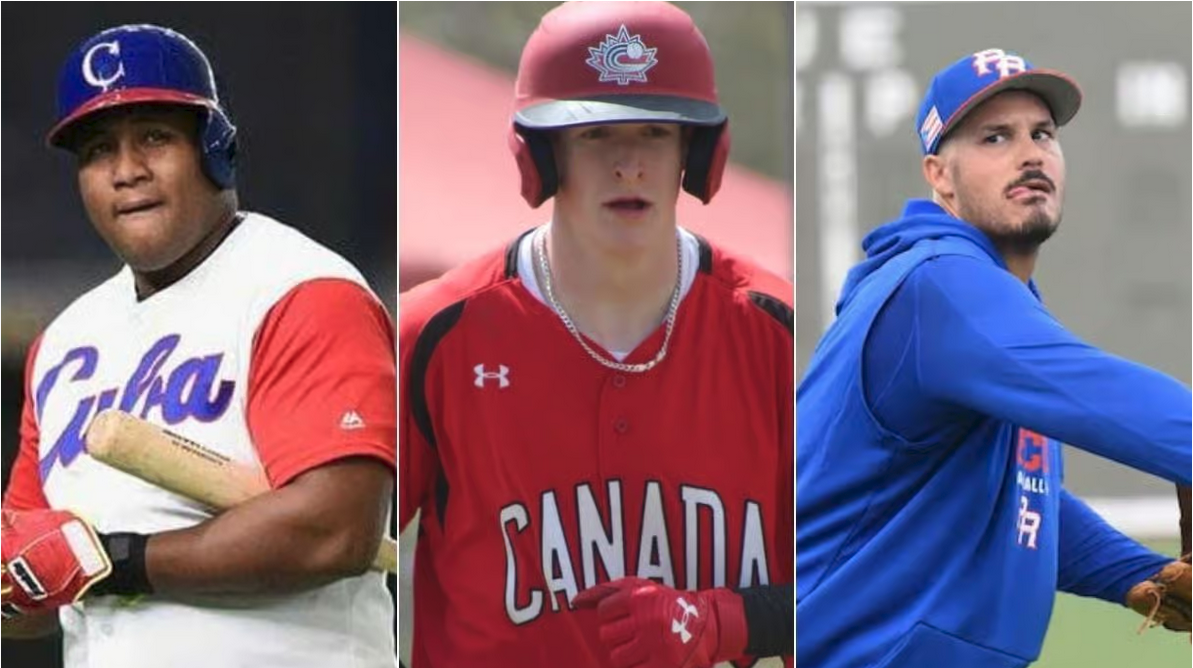
The group includes Cuba, Puerto Rico, Canada, Colombia, and Panama—five teams capable of competing with one another in a short tournament where pitching and tactical execution often make the difference.
For Cuba, the challenge lies not only in the talent of its rivals, but also in the need to find stability in a tournament where each game can determine qualification to the next round.
Puerto Rico: the big favorites
Unlike other Groups of the tournament, Group A does not feature a constellation of superstars. However, its competitive balance could make it one of the most intense groups in the championship.
Host nation Puerto Rico arrives with several notable absences due to insurance issues—among them Carlos Correa, Francisco Lindor, and Javier Baez—but still maintains a solid Major League core.
The team managed by Yadier Molina continues to rely on an elite bullpen headed by Edwin Díaz, one of the most dominant closers in baseball today.
In addition, the defense and offensive power received a significant boost with Nolan Arenado, who decided to represent his mother’s homeland after winning the Classic with the United States in 2017. On the mound, Seth Lugo and Jorge Lopez lead a rotation designed for a park that has historically favored pitchers.
The home-field factor and the atmosphere at Hiram Bithorn could tilt the balance in favor of Puerto Rico in a group where every run will matter.
Canada, the opponent with the greatest explosive potential
If there is one team that generates expectations in the group, it is Canada. Even without star Freddie Freeman, the Canadian squad features one of the most powerful outfields in the group.
The offense rests on the names of Josh Naylor, Bo Naylor, and Tyler O’Neill, while young Denzel Clarke provides elite defense in the outfield.
On the pitching side, the ace will be Jameson Taillon, tasked with leading a rotation that will try to keep games close so that the offense can make the difference.
The player to watch is prospect Owen Caissie, considered one of the most promising young talents in the tournament.
Colombia and Panama: two rising teams
Over the last decade, both Colombia and Panama have taken firm steps forward in international baseball, and this Classic could represent their consolidation.
Colombia is relying on the experience of starters JoseQuintana and Julio Teheran, two veteran arms well acquainted with high-pressure scenarios. On offense, leadership falls to Gio Urshela, while prospect Michael Arroyo emerges as a player to watch for his combination of speed and power.
Panama, meanwhile, could become one of the most dynamic teams in the group. Shortstop Jose Caballero, the American League’s stolen base leader, is the offensive spark of a lineup that also includes Edmundo Sosa and very fast young players such as Enrique Bradfield Jr.
Their strategy is to apply pressure on the bases and manufacture runs with speed, a style that has historically troubled more powerful opponents.
And what does Cuba bring?
The pillar of Cuba’s pitching staff will be Livan Moinelo, a standout left-hander from the Japanese league and the Pacific League MVP in 2025. His dominance on the mound could make the difference in close games, but the miracle would lie precisely in Cuba’s ability to keep games close.
The lineup is also very limited, as it only added two players linked to Major League organizations: Yoan Moncada and pitcher Yariel Rodriguez.
Almost all the weight will fall on players who have already experienced their best sporting years, such as veteran Alfredo Despaigne, 39 years old and the all-time home run leader in the World Baseball Classic, and Alexei Ramírez, a 44-year-old former MLB All-Star who brings leadership and symbolism to the team. But that will not be enough to advance past the first round.
Predictions for an unpredictable group
Analysts and journalists agree that Group A could be decided by the smallest details. Projections by specialists such as Cuban journalist Francys Romero point to Puerto Rico and Canada as the favorites to advance.
MLB editor Matt Monagan commented something similar: “I think Puerto Rico will advance, since it still perhaps has the best Major League roster among the five, and the local crowd at Hiram Bithorn Stadium should make itself felt strongly. And then I think Canada will be the second team to advance. Surprisingly, it would be the first time they manage to do so.”
In a conversation with El Toque, Cuban sports journalist Andy Lans noted: “The leader of Cuba’s group should be Puerto Rico because it is the host and the strongest team, despite the difficulties they had assembling all their MLB stars.”
“For second place in the group I see Cuba as having a chance, because although it’s a team lacking established MLB figures, they do have players with experience in the event, such as Despaigne, Erisbel Arruebarruena, or Roel Santos, who have performed well in this tournament. There is a core of Cuban players who have been together since the training camp in Havana and that will be strengthened by young players from the Minor Leagues,” he added.
Well-known ESPN commentator Ernesto Jerez also said that Cuba should never be ruled out in this type of short tournament.
The argument is clear: when the Cuban team achieves collective cohesion, its tactical baseball and competitive tradition can turn it into a dangerous rival, even against teams with greater Major League presence.
With ten games scheduled in San Juan and minimal margins between the five teams, Group A promises a first round full of tension. For Cuba, the challenge will be to find consistency from the first pitch—something they have not shown in the exhibition games leading up to the event.
Because in this group, more than star power, what will determine the teams’ fate is who executes the so-called “small ball” best at the key moments.
First published in Spanish by El Toque and translated and posted in English by Havana Times.