
By Lien Estrada
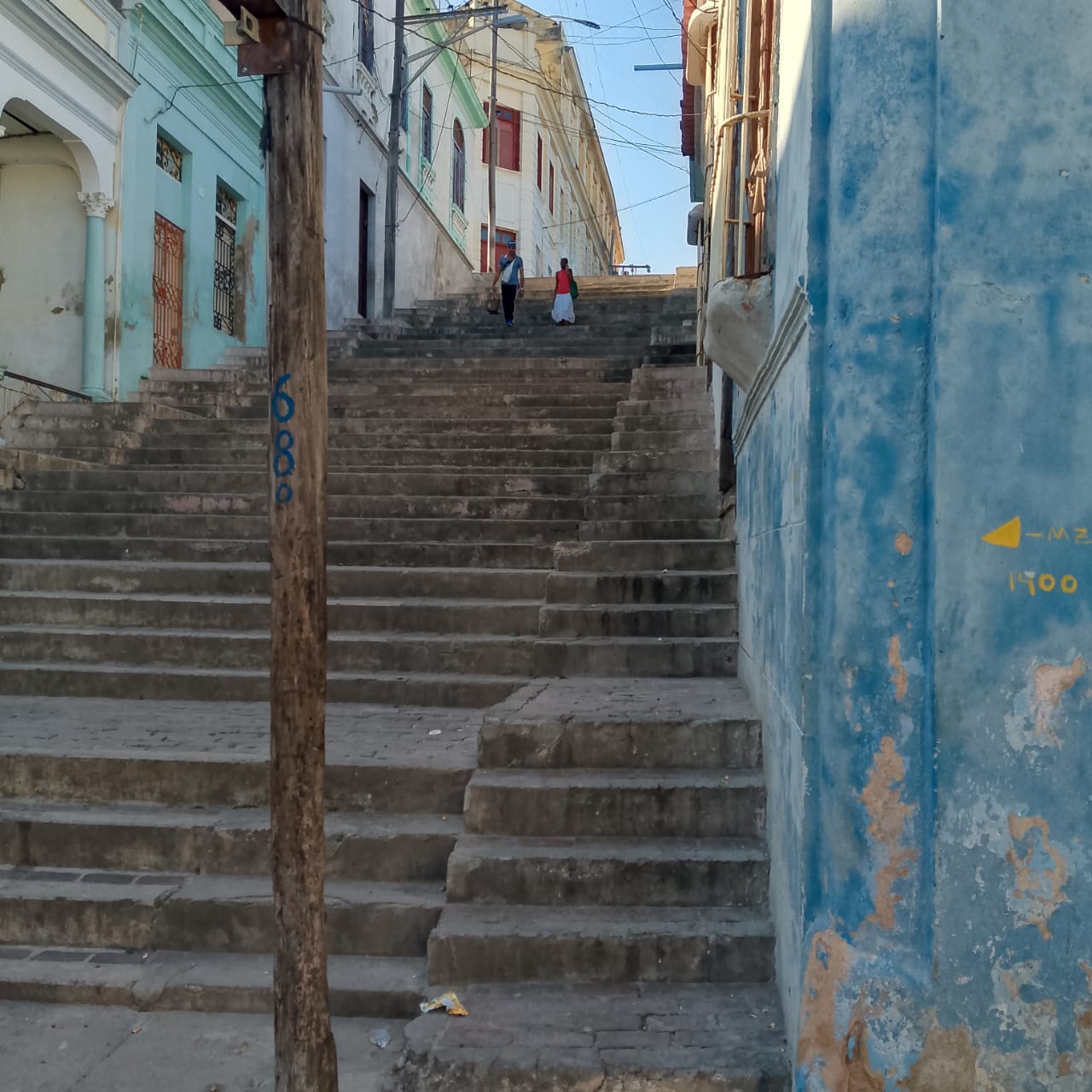
HAVANA TIMES — I was visiting my family in Santiago de Cuba. I was walking along the Padre Pico stairway when I heard one man shout at another, very uncomfortably: “It’s true that to live here women have to take pills and men have to get drunk!”
Since I heard that remark back then, a lot of rain has fallen, but it feels increasingly verifiable to me. I know it when I get together with friends and we share those chemicals that help us exist — we pass around some pills in case they’ve gone missing, and because on the informal market they’re very expensive. Not to mention the huge demand for medications among the population in the almost empty pharmacies.
And as for the consumption of alcoholic beverages, their sales never disappear anywhere, not even in slow times. Not even in the worst crises, like the one the country is going through now.
But if you think about it again, that’s not the only way we escape from this current Cuban reality. I have a friend who, among all the people I know, was the only university student who, after finishing his coursework, was asked to sign some documents and then was told: “You don’t have to sit state exams or complete a final thesis to obtain your bachelor’s degree.”
My friend had earned top marks in every subject. What his professors and classmates may not know is that my friend’s way of rising above his marginal neighborhood in Camagüey — and other Cuban challenges — is reading. My friend reads compulsively every day. Once he told me it was his way of forgetting what he had to live through. Reading is his drug.
For some, resistance may be studying a lot, but for others it’s working constantly. Working beyond exhaustion, without thinking about anything, as a friend once told me her mother did. She worked in a tourism establishment, on 24-hours-on, 48-hours-off shifts, from very early until the last customer left at night. Without complaining. Without analyzing this or that, except what was essential. And then she’d take refuge in the usual Brazilian soap operas — and now the Turkish ones, which are great for contemplating other worlds, with their love dramas and happy endings. And whoever prefers action movies — another widely consumed entertainment — can also access them somehow in homes that run the business of copying digital files, charging by the gigabyte.
Personally, when I feel like shouting, “I can’t go any further,” friends offer me their remedies: physical exercise as soon as I get out of bed, drinking water before coffee, walking as much as I can. Meditating too, practicing yoga — you have to learn to master the ego, the mind, and its sociocultural conditioning. Drinking sun-charged water — that is, water left in a glass bottle in the sun for a few hours before consuming it. There’s always something more than what one can see or know; it’s another vision of life, which is why cultivating spirituality above all is good.
Trying something you enjoy whenever you can and not giving so much importance to what you lack or don’t have — even if you have nothing. The point is to torment yourself as little as possible. Cultivating faith, strengthening social relationships. Not watching so much news: “Of what they tell you, believe nothing; of what you see, or half” — this applies everywhere, but with the government even more. It can also be uplifting to devote yourself to the home: cleaning it by scattering rose petals in the bucket of water used to mop, keeping it always orderly, creating your world in that space where no one can enter without your permission. That would be another way of surviving — of escaping.
Going to church is another way to get fresh air when what surrounds you feels suffocating. I’ve considered it a form of resistance too. A Catholic brother once told us that back in the 1960s or ’70s he arrived at a church empty of parishioners, sat in the front pew, and as he was leaving the priest said, “I’m not going to hold Mass.” And he, still a young man, replied: “Hold it — I’m here”; and he did. That era when people entered churches to destroy everything — already closed, without congregations — is no more.
When you visit Methodist churches, for example, during their evangelizing or healing campaigns, they have to hold more than one service a day because of the number of attendees. Or the Pentecostal churches, which even without special services open missions all over the island. It’s as if that same society, given the level of frustration it bears, needs to bet on the complete opposite — on what has “nothing to do” with what was preached ad nauseam from communist, materialist state platforms, even to the point of the absurd.
One could think that there are as many ways of facing challenges and overcoming harsh realities like those lived in Cuba as there are people in the world. In Cuba, transformations have been radical in more than one respect, and today’s exits or solutions cannot be the same as years ago — at least on the people’s side. The government may insist on its oppressive mechanisms, like political rallies and imprisoning those who protest, as in those distant early years, but that is not precisely the reaction of the majority. The reactions are others, very different.
I would venture to say that this same attitude of “continuity” the government claims to uphold is not even found in the very city — the “Cradle of the Revolution,” as our Santiago de Cuba has so often been called.
Read more from the diary of Lien Estrada here.