

By Chen Ziqi*
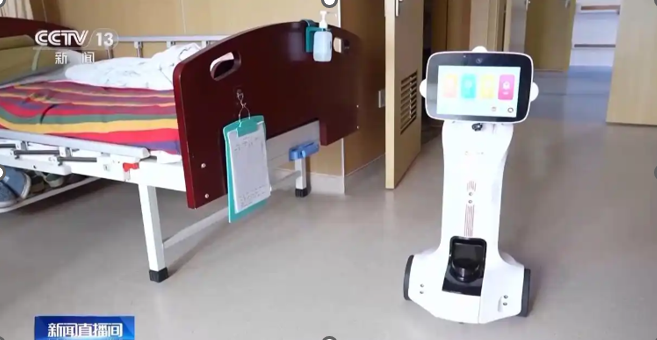
HAVANA TIMES – In a care facility in eastern China’s Jiangsu province, a waist-high white robot glides quietly between rooms. Its digital face lights up in a cheerful greeting as it makes its rounds. It reminds caregivers to reposition bedridden residents, prompts medication schedules, and tracks basic vital indicators, notifying medical staff if it detects unusual changes in heart rate or breathing.
It may look futuristic, but the problem it addresses is deeply human, and increasingly urgent.
Aging societies across the world are confronting the same reality: demand for elder care is rising while caregiver shortages intensify. In Latin America, the demographic shift is accelerating. According to Pension Policy International, in countries such as Chile, Brazil and Argentina, more than 15 percent of the population is now aged 65 or older.
Cuba faces an even sharper transformation. The FIU Cuban Research Institute projects that by 2050, an estimated 1.4 million Cubans, roughly 40% of the country’s older population, will be over the age of 80.
In many Latin American societies, as in China, elder care remains largely family-centered. Adult children often shoulder primary responsibility, even as smaller family sizes and migration strain traditional support systems.
It is against this backdrop that the fast developing service robots are gaining attention, attracting both public interest and growing industry investment.
Fully autonomous humanoid robots capable of cooking, cleaning, and providing comprehensive elder care are still a long way off. But in more targeted ways, technology is already making a measurable difference.

Mobility support is one example. Exoskeleton robots are being introduced in some care facilities and community rehabilitation centers, helping older adults walk again. These wearable devices support hips and knees, adapting to each wearer’s movement patterns.
Wu Liying, a woman in her 70s from Hangzhou used one in a rehabilitation session recently. With its assistance, she was able to walk from the first to the third floor without resting. “I felt the equipment lifted my legs and made walking much easier,” she said.
Other innovations focus on relieving caregivers from physically demanding tasks. Cleaning bedridden older adults after a bowel movement is a time-consuming and exhausting daily task.
Now, nursing robots are stepping in to help. Each features an attachment that both looks and works like a traditional dipper. Connected to a main cleaning unit on the floor, it uses built-in sensors to detect waste, clean the area, and air-dry the body automatically.
A caregiver at a care facility in northwest China’s Shaanxi Province said, “Before, I spent more than half a day cleaning up waste and changing bedding. Now, with the help of nursing robots, I have more time to talk with my older residents.”
At present, Latin America is still in the early stages of adopting service or care robots. In Mexico, some private clinics have introduced robotic-assisted therapy devices to help older adults with mobility or physiotherapy exercises. In Cuba, universities and technology research centers have experimented with small educational or social robots in healthcare and elder support initiatives. Hospitals and rehabilitation centers in Brazil have also trialed exoskeletons to help patients regain mobility after strokes or injuries.
Despite the promise, widespread use of service robots in private homes remains limited. Real-world conditions pose practical challenges: small apartments, high costs, and ease of operation.
These hurdles, experts say, will take time to overcome. Wang Sumei, an associate researcher at the Chinese Academy of Sciences specializing in technological innovation, noted that the priority is improving technical expertise to enhance the practicality of care robots in real home settings. Collecting data is crucial for breakthroughs, but it is costly, and real-home experiments remain limited.
Building on this, reducing costs will be essential to expand wider adoption. For example, exoskeleton robots used for rehabilitation can cost around $22,000, beyond the reach of most households.
Looking further ahead, social questions also emerge. How might emotional attachment to machines affect older adults? Could heavy reliance on robotics alter long-standing family caregiving traditions? These ethical considerations will require careful thought as the technology advances.
Industry experts emphasize that care robots are not intended to replace people. Instead, they aim to handle repetitive and heavy tasks: lifting, cleaning, monitoring, so caregivers and adult children can have more time and energy to focus on personalized care, like rehabilitative treatments and meaningful conversation.
Beyond technology, broader policy support remains essential. Expanding community-based rehabilitation services, increasing public health insurance coverage, ensuring equitable access to elder care, particularly in underserved regions, are all critical to social stability in aging societies.
In this larger ecosystem, service robots may play a bigger and more important role, complementing human care while addressing demographic challenges faced by aging societies globally.
2026 marks the opening of China’s 15th Five-Year Plan period, a new policy cycle in which elderly care remain a central priority. As demographic pressures intensify, technologies that support older adults are expected to receive stronger institutional backing, from research funding to pilot programs and public service integration. Under China’s long-standing human-centered development approach, innovation is not viewed as an end in itself, but as a means to enhance well-being. In that context, caring robots are less about futuristic display, and more about building a society that adapts thoughtfully to the realities of aging.
*Chen Ziqi is an HT guest writer
Read more feature articles here on Havana Times.