
By Andres Kogan Valderrama
HAVANA TIMES – When Gabriel Boric took office in March 2022, many of us naively believed there was a real possibility of breaking with that long Chilean history of treating the Mapuche people and other Indigenous peoples as a mere “security issue,” rather than as nations with full, collective rights.
I point this out because he said it clearly during the campaign: end the State of Exception in Wallmapu, truly restore ancestral lands, recognize the plurinational state, and open a political dialogue not always mediated by repressive logic. The first signal was strong: as soon as he won the first round in 2021, he called Elisa Loncon.
Those of us who supported him — in the midst of a constituent assembly process that seemed poised to break with centuries of colonialism — believed that at last the monocultural and one nation state could be left behind, one that has only brought inequality, structural racism, and territorial exclusion.
In fact, I myself joined Convergencia Social in 2021, because I felt that the constituent process and demands such as the construction of a plurinational state needed to be backed by a party and a government presenting themselves as transformative and placing Indigenous demands at the center.
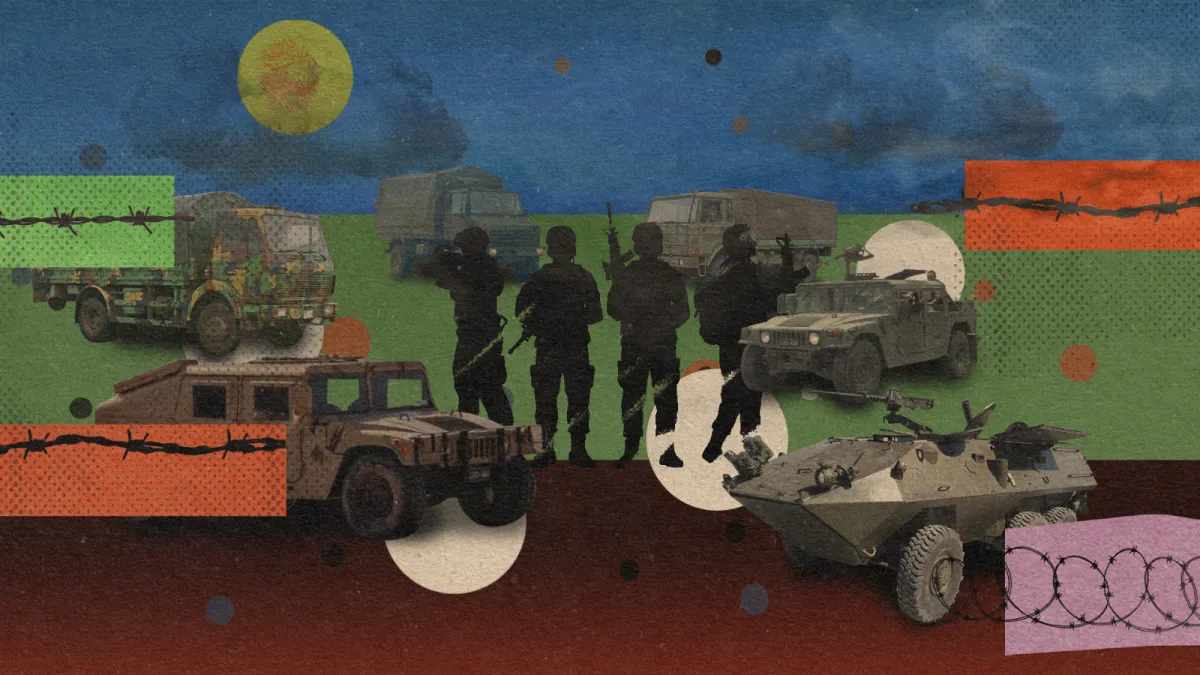
But that did not happen. Boric’s government did not move forward with a structural transformation toward plurinationality; on the contrary, it reproduced — and even hardened — the colonial logic it had so strongly criticized from the opposition. It should not surprise us, then, that the militarization of Wallmapu continued the same or worse: states of exception were renewed one after another, with the Armed Forces on highways and in territories.
From the government, they defend themselves by pointing to the creation of the Presidential Commission for Peace and Understanding, with proposals for a new land system and an agency for reparations and justice. But it did not address the core issues: structural colonialism, forestry extractivism, or the militarization already entrenched as state policy.
The same occurred with the Buen Vivir Plan: although there were resources for public works and infrastructure in Indigenous territories, power relations were not changed, nor was the extractivist model questioned. Permanent militarization continued, without progress in territorial restitution or self-determination.
Thus, the forestry model — a direct heir of the “Pacification of Araucanía” — remained intact, deepening the water crisis, poverty in communities, and territorial tensions. There was no serious reform of the Water Code nor massive return of usurped lands; only isolated announcements, non-binding dialogues, and gestures that diluted autonomy.
The defeat of the 2022 constituent process — with its explicit plurinationality — left the government without real tools. Instead of pushing mechanisms for sovereign Indigenous participation or a decolonizing agenda beyond symbolism, Boric opted for electoral pragmatism: prioritizing “social peace” through coercion rather than historical justice.
The result was greater distrust in communities, the continued criminalization of Mapuche protest, and a legacy added to the long Chilean list of unfulfilled promises to Indigenous peoples, who have had to deal with irresponsible and incompetent governments that use them during campaigns and then forget them.
Consequently, Gabriel Boric’s government did not confront the economic power that sustains extractivism in Indigenous territories (forestry, hydroelectric, mining). It did not dismantle the racist logic that sees the Mapuche as an obstacle to “development.” Nor did it build real alliances with Indigenous movements, preferring institutional go-between who end up diluting root demands.
This does not mean I justify or endorse the violent practices of certain sectors that claim the killing of civilians as political action in the name of the Mapuche cause. That is condemnable and runs counter to any project of collective justice. But neither should we forget that those same sectors also rejected plurinationality as an institutional and democratic path.
Ultimately, Gabriel Boric’s government chose the continuity of the colonial state over a profound transformation — one that would have gone far beyond mere commissions without real power — denying the possibility of building an institutional framework that recognized self-determination, returned what was usurped, and cease responding to a historic conflict with militarization.
Read more from Chile here on Havana Times.