

By Amado Viera
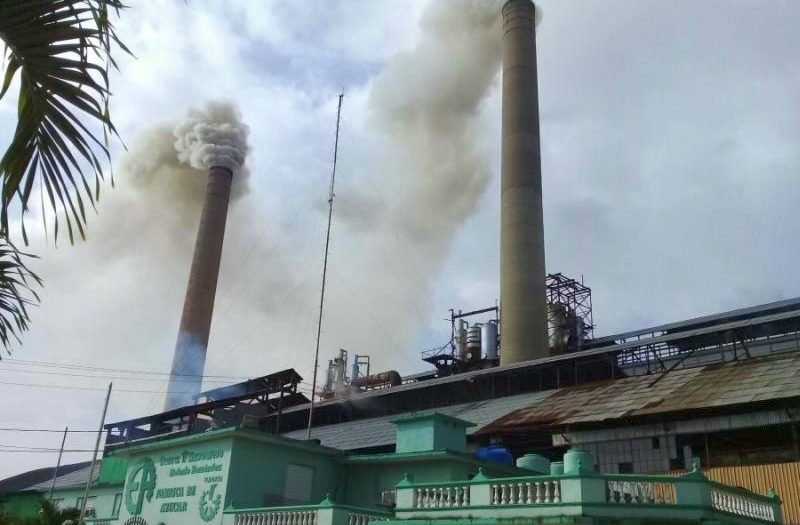
HAVANA TIMES — On February 15, the Melanio Hernandez sugar mill received the order to halt its machinery due to the fuel shortage. That mill, in the province of Sancti Spíritus, was the only one still grinding cane in Cuba. Although the decision has not been officially announced, everything indicates it will be permanent, which in practice would end a sugar harvest in which the authorities had not placed many hopes.
In a long decline, Cuba has gone full swing from the world’s leading sugar producer to having to import sugar to meet national demand.
Even before the starting whistle, the poor condition of the plantations and mills, along with the lack of resources and skilled labor, had forced expectations downward. Not even covering the national demand for sugar—estimated at around 250,000 tons per year—was anticipated as an achievable goal. Among the roughly twenty mills participating in the harvest, none had production plans comparable to those of other eras. At the Siboney mill, for example, the commitment was to produce 4,000 tons of sugar in 61 days of milling—less than a fifth of the volumes it used to deliver twenty years ago.
But workers like Juan Miguel, a 67-year-old centrifuge operator, consoled themselves by reasoning that “a short harvest is better than none.” “The saddest thing in the world is a sugar town in ‘dead season’ [the eight or nine months of the year without harvest],” he told me when I traveled to the Siboney community a couple of weeks ago. That mill, in fact, was the first this year to start up its machinery anywhere in the country.
The event, which took place in the early hours of January 1, gave the nearby community an additional reason to celebrate the arrival of 2026. A mill in harvest brings benefits that go beyond the wages paid to its workers, Juan Miguel explained. “The mill is the heart of any sugar town. You can get an appliance repaired there or find a vehicle to transport a sick person. In the past, even the operation of the aqueducts was handled by the mills.”
A neighbor, Nilia Rey, described to me how transportation improves while Siboney is in harvest. So much so that locals stop waiting for the municipal-capital bus, which in normal times is almost the only affordable option for traveling to the provincial capital. “We take advantage of the bus that at dawn brings in workers from the mill who live in Camagüey. That vehicle usually makes several round trips throughout the day, which is a huge help because it charges much less than private trucks. The only bad thing is that we can count on it only while the mill is operating.”
You don’t have to go far to see the difference between the few communities that kept their sugar factories and those that lost them as a result of successive ‘restructurings’ ordered by the Government. In Siboney, life is far from easy, but less than 20 kilometers away, in the former company town of the Alfredo Alvarez Mola mill, reality poses even greater challenges.
Nilia says she has seen it firsthand when she visits her “church brothers and sisters” who live there. “Because of the lack of transportation, people often have to walk the seven kilometers to the Central Highway. With the mill’s closure, not only did transportation decline, but so did employment, and the ‘points store’ closed—the place where Sugar Ministry workers bought many goods at subsidized prices. Now even the cane fields are gone, and the marabú [a thorny shrub] has almost surrounded the town. That area was left orphaned, and anyone who can tries to leave. Even here in Siboney I have neighbors who came from Mola and Hatuey. ‘As bad as this is, that was worse,’ they tell me.”
A half-finished harvest
Despite its short duration, the recently concluded harvest was full of controversies. One of the most widely covered was sparked by the news that in Granma province much of the cutting would depend on machete workers.
According to the official announcement, at the Enidio Diaz mill those workers would receive 700 pesos per ton of cane cut, which on average should guarantee them a monthly pay of 22,000 pesos. Manual cutting would increase by 80% compared to the previous harvest, becoming the main supply method for that mill.
It was a controversial but to some extent inevitable decision, given the critical fuel supply situation the country was already facing. That situation has worsened dramatically since January 29, after President Donald Trump ordered a virtual “oil blockade” against the Island.
Harvesting combines consume between 1.5 and 2 liters of diesel for every ton of cane they cut. To that must be added the fuel used by trucks transporting the cut cane, as well as the fuel mills use in their operations.
“And that’s just the tip of the iceberg. The Soviets estimated that producing one ton of sugar required up to two tons of petroleum [15 barrels]. For it to be profitable, almost the entire process must be mechanized, from planting to exporting the final product. It’s a very complex agro-industry, and therefore expensive,” explained Omar Martinez, a transport operations engineer who for many years ran cane collection centers at mills in Camagüey province.
In his opinion, returning to dependence on machete workers is not an alternative that could be generalized. “Granma has exceptional characteristics: its rural population percentage nearly doubles the national average and it has few sources of employment, so the proposal to work as a cane cutter is attractive to part of the labor force. Nothing like other territories, where there are often not enough workers even to fill positions inside the mills.”
In Siboney, that circumstance benefited Juan Miguel, who had no difficulty being rehired after retirement. “Very few young people want to work in sugar. Those who can’t leave the country prefer to go into business or find work in a private business, where they earn more,” he noted.
Low wages and uncertainty about the future are burdens the sugar industry has carried since the Alvaro Reynoso Task, which in the mid-2000s dismantled more than half the mills and cane fields that existed on the Island. Younger generations saw their parents and grandparents lose their livelihoods without any possibility of appealing decisions made in Havana.
To change that reluctance would require efficient harvests and a sustained increase in sugar and byproduct production that could guarantee attractive pay for the industry’s workers. That reality is hard to imagine today. During this campaign Siboney stopped its machinery so many times that many people in town couldn’t say whether it was actually still milling. Every stoppage meant less production and lower wages for workers.
“They say yes, but sometimes even we’re not sure,” Juan Miguel confessed when I asked whether they were still in harvest. In the final weeks before receiving the order for definitive shutdown, cane deliveries from the fields had been intermittent due to delays in diesel arrivals. Around the same time, the workers’ bus from Camagüey began reducing its trips, affecting local residents who relied on it.
In the end, this year’s already shortened campaign was abruptly canceled, and the 2027 harvest—which should already be in preparation—remains an unknown.
“Life has shown how right that Cuban saying was: ‘Without sugar there is no country.’ Cubans are learning it the hard way,” Juan Miguel said as we parted. To return to Camagüey that day I caught a ride on the mill workers’ bus. Now, without a harvest, Siboney’s residents don’t even have that option.
Read more from Cuba here on Havana Times.