

By Darío Alejandro Escobar (Joven Cuba)
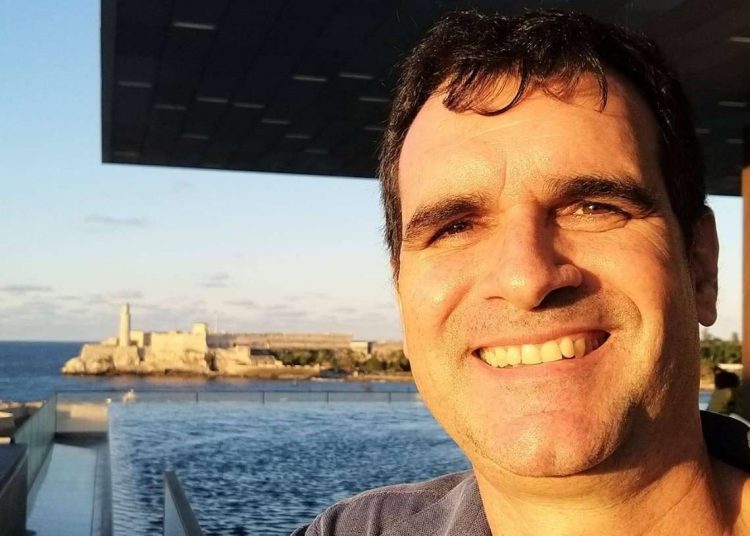
HAVANA TIMES — It has become known through social media that Abel Tablada, an architect and full professor at the Technological University of Havana (CUJAE), was removed from his teaching duties because of his political opinions.
Since the news became public, several of his students, colleagues, acquaintances, and readers of his texts on social media have spoken out to protest what is a great injustice against a professional who is clearly brilliant and decent.
The history of dismissals and expulsions due to dogmatism in Cuban universities is not short. It goes back several decades. Contrary to what one might think, our universities in general are conservative spaces in their institutional functioning. Their routines are almost nineteenth-century, and in many cases unwritten rules tend to preserve practices that are not always emancipatory. In the time of my parents and grandparents, people were expelled for religious reasons, for having non-heteronormative sexual preferences, or for expressing disagreements with the political system.
Fortunately, there were always professors who tried to break those patterns through their teaching, through outreach activities, and there were even cases where they practically became family to many of their students during a crucial stage in young people’s lives.
A few days ago, the playwright and professor Roberto Viñas was also expelled from the Higher Institute of Art (ISA), likewise because of his political opinions. It may be that these two expulsions are coincidences, but in Cuba there are very few coincidences in politics. Could it be that there is an attempt to return to an even more repressive stage in the nation’s civil liberties?
I do not personally know Abel Tablada or Roberto Viñas, but I have read very good texts by both of them that question the society in which they live. On some points I agree and on others not so much, but they are two Cuban thinkers who, along with other critical intellectuals, help us think about contemporary society and its many challenges.
I was glad that they were university professors because that meant they were teaching their students to think for themselves, not in a unilateral way in a world so damaged by that type of thinking. That unilateral thinking is often what later pushes those same students toward the far right when they change contexts, because when you get used to repeating instead of questioning, replacing one dogma with another is the easiest thing. Now it seems they will no longer be able to continue educating in the classroom and will have to continue their ministry in other formats or places. With that, not only does the institution that expels them lose—we all lose, those of us who believe that a prosperous country is built from the plurality of honest and decent voices.
My own experiences
The issue of sanctions and expulsions from the university and other institutions is something I know very well. Too well. I was close to being expelled from the university several times while I was studying Journalism at the Faculty of Communication, and later, after graduating, I was removed from the directorship of the magazine Somos Jóvenes and then expelled from the magazine El Caimán Barbudo on the orders of the political bodies that direct the state press.
At the university they did not manage to expel me because, in addition to the unwavering support of the Federation of University Students in my faculty, I also had the brilliant management of two deans who knew very well how to navigate the political intricacies of the institution so that I would not be expelled from the school. I know firsthand that both of them worked very hard to prevent that from happening. One of them was even the advisor for my graduation thesis. I thank them both from the bottom of my heart. I am a professional thanks to them and to several of my best professors.
Later in my professional life things were not the same. Although I had the absolute support of my immediate bosses at the magazines where I worked, the sanctions came from Olympus, as people say in a tragicomic tone when the orders come from the leadership of the political organizations. In fact, the director of El Caimán Barbudo at the time, Fidel Diaz Perez, resigned from his position after 20 years in the role when I was expelled and banned from returning to Editorial Abril for four years.
I was not a right-wing student. I was not and am not a journalist with right-wing political opinions. But I was always very restless, outspoken, sometimes ironic, and I liked asking the most complicated questions and investigating complex topics from a journalistic standpoint. I also have a flaw in the eyes of dogmatic bureaucrats: I respect all opinions that do not violate the rights of others, whether they coincide with mine or not.
Some years have passed and the waters have returned to their level, but the pain over what could have been and was not has never left me. I would have spent my whole life in those magazines writing, if it had been up to me. The Cuban bureaucracy did not want that.
Now I read that many students, and even the FEU, are demanding that Abel Tablada be reinstated in his position. I read about so many people on social media supporting him and calling for the decision to remove him from teaching to be reversed, and I cannot help wondering when these clumsy decisions that cause so much harm to Cuban professionals will finally come to an end.
Cuba is going through one of the most serious moments in its history. Cuban society needs unity, harmony, tolerance, respect, freedom, and prosperity. All efforts made to maintain and achieve greater levels of these virtues will still be too few. Any effort made against that objective must be corrected. It is even suicidal, from a political point of view, for a government that has seen part of its popular support diminish, to allow something like this to happen. A minimal analysis based on common sense makes it clear that it is disastrous to add more enemies than the usual ones, who are already very powerful.
It is because of news like this that many of us who honestly do not want to see destroyed the little that remains of that humanist project that was the Revolution say that Cuba needs a national dialogue. It is not possible to continue governing in the twenty-first century as if it was the twentieth. We have to be better. Young people are leaving Cuba, several of the best minds are leaving the island, and the few who stay and have concerns are expelled. Who benefits from something like that?
For my part, I hope that the leadership of CUJAE will correct its decision and restore Professor Abel Tablada to his faculty. Cuba needs him. I hope that ISA will reconsider and offer Roberto Viñas the opportunity to return to its faculty. Cuba needs him. But if that does not happen, if it does not occur, I hope they continue writing, thinking, researching, contributing as much or more than they have until now, because the truth is that Cuba—that is, all of us—needs them.
Hopefully they will not grow bitter or tired. Hopefully justice will be done. Hopefully.
First published in Spanish by Joven Cuba and translated and posted in English by Havana Times.
Read more from Cuba here at Havana Times.