
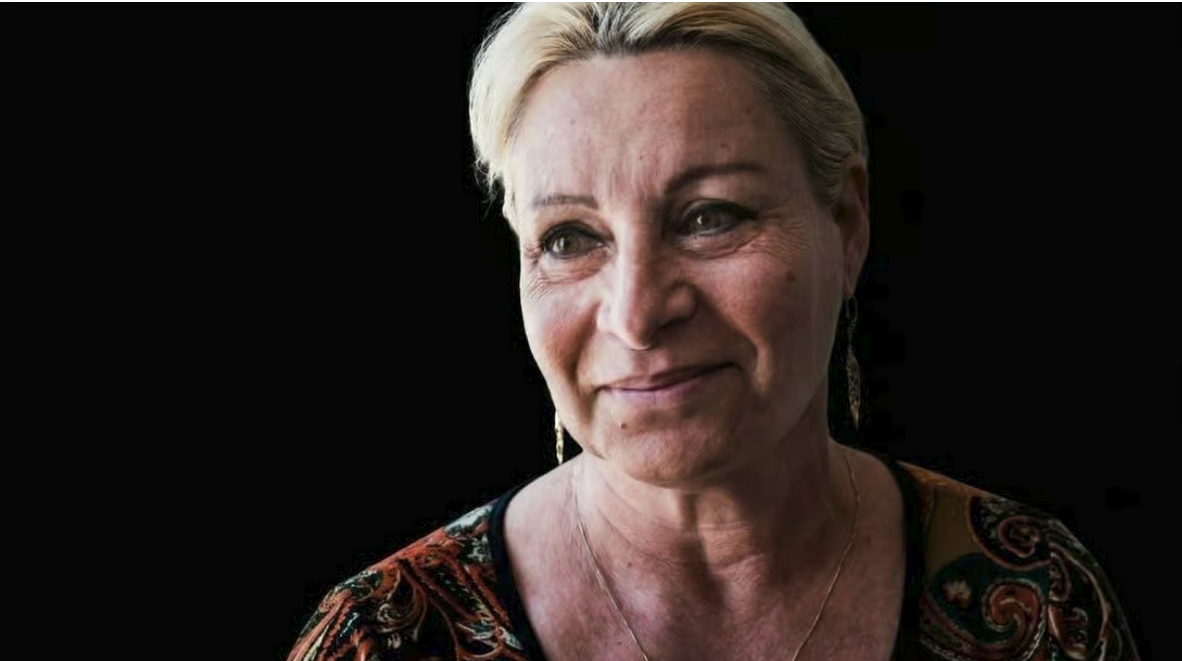
The Cuban regime accuses her of financing an armed infiltration

By Melissa Cordero Novo (El Toque)
HAVANA TIMES — A colonel from the Ministry of the Interior stated on national television — on the night of February 27, 2026 — that Maritza Lugo was the main financier of a group of ten Cubans living in the United States who were allegedly planning to bring weapons into the island by sea.
Aboard a speedboat, those Cubans had been shot two days earlier in Cuban territorial waters north of Villa Clara. Four of them died instantly and six were taken to medical facilities. Not much else is known about how the confrontation occurred. On March 4, the regime’s Prosecutor’s Office charged the surviving crew members with terrorism; that same day one of the wounded men, Roberto Álvarez, died, the Ministry of the Interior reported a day later.
Speaking to journalist Mario Penton on Martí Noticias, Maritza said that the accusations made against her by the regime in Havana were infamous. She said she was not responsible for training or financing the group of ten Cubans intercepted by the coast guard.
But who is Maritza Lugo?
For many people, this is probably the first time they have heard her name; they may wonder about the story of this Cuban woman who was publicly accused of terrorism by the regime’s enforcers. Others have known very well who Maritza Lugo is for quite some time.

I spoke with Maritza two years ago, in 2024. One evening, after she finished her chores, we talked about her opposition activity in Cuba, her family, the punishments she endured, her years in prison, and her exile.
Maritza’s testimony is one of many that make up the history of Cuban political dissent, so often buried and belittled by the State. Her story is one of induced suffering, of bodily experiences of pain and anguish that were constantly moderated and conditioned by the Cuban regime. When I asked her in 2024 how she would describe herself, one of the first things she said was: “I am a woman who has suffered tremendously.”
Social suffering seriously damages subjectivity. Maritza is a wounded woman. That does not mean she has not resisted or rebuilt herself in the best way she could; that she has not risen from the darkness that a prison cell casts over the soul and conscience; that she has not stared into the void in order to find other ways to fill it.
From somewhere in the United States, she continues to think about and do what she believes is right for Cuba, like almost all exiles and like almost all former political prisoners who manage to escape the country.
This is her testimony. It has been carefully edited, but without altering the rhythm or arguments of the conversation.
***
My name is Maritza Lugo, former political prisoner. Considered a prisoner of conscience by Amnesty International.
I am a Cuban country woman who has dedicated her life to defending the human rights of our people. I have suffered imprisonment, torture, and every kind of abuse for confronting the Castro-communist dictatorship. I am a simple person. I did not go to university because they did not allow me to. They wanted to force me to study nursing, and I wanted to be a veterinarian.
They cut my opportunities short because from a very young age I refused to join the ranks of the Castro regime. They ruined my family. They destroyed everything. I am an exile.
I was born in Santa Maria del Rosario, in Havana province, in 1963. When I was born, the diabolical Revolution had already triumphed. My family was humble, rural. From a young age I realized that what existed in Cuba was not what I wanted for my country, for my people, for my family, because I saw a lot of abuse, misery, and discrimination.
When I was in pre-university school, in the 1980s, I saw how my classmates (families) who were leaving the country or wanted to emigrate were mistreated; those were the times of the Mariel exodus, and they were beaten and stoned. I defended them because I believed that was a crime, a great abuse. I confronted teachers and many people at the school. Because I practiced martial arts, they respected me a lot.

I didn’t defend those young people because at that time I was fighting against the government, but because I was fighting against injustice. Without realizing it, I began to stand out as a young anti-communist because I did not approve of or support certain actions of the regime.
One day, State Security officers came to recruit me at the school where I practiced sports; they wanted me to work for them. I told them no: “I don’t like military life, I don’t like the system, I don’t want to be part of any repression.” My refusal ended up hurting me a lot because afterward they did not allow me to go on to university.
Since I was a child, I also saw my grandfather hiding at night to listen to foreign radio stations. I noticed and thought: “This is like a big prison because my grandfather has to listen to the radio in secret.” From that moment on I developed a natural rebelliousness; I had been born with that Revolution and did not know what freedom was, did not know what democracy was.
***
I married quite young. The father of my daughters, Rafael Ibarra Roque, began working in a human rights organization, and that is where our struggle began. We gathered around the “Frank Pais” November 30 Democratic Party and tried to build that organization. From then on, what began to happen to us was horrible. Constant searches of our home, surveillance, and they ended up arresting Rafael; he was sentenced to 20 years in prison for crimes against State Security. Later, I myself would serve five years in prison.
The party was founded in 1991. At first I was like a kind of secretary, taking notes at meetings. We carried out civic activities; we never committed acts of violence or anything like that. But for the regime, if you were against the system, whatever you did you were already a terrorist, anti-communist, criminal. We even tried to legalize the organization, and of course it was denied.
We tried to organize people so they would have an alternative different from the Communist Party. We taught them that there were rights in the world worth fighting for, we spread the Universal Declaration of Human Rights, and we tried to help people learn and become aware that it was necessary to struggle so that in the future they could have what people anywhere else in the world have. But every time we met, they would come and arrest us. For the regime, meeting was a serious crime.
When Rafael was arrested in 1994, I decided, so that so much sacrifice would not be lost, to continue with the Party. Then came more detentions, house arrests, and confinement in punishment cells.
Rafael was always a very good man, a church man, a good father, a good son. When he was detained, he spent about six months under investigation at State Security headquarters. Later, without any proof of the crime he was accused of, he was sentenced by conviction*. To sentence someone by conviction means that the regime is convinced the person committed the act and therefore does not need proof.
***
When Rafael was sentenced, we already had our two daughters. The youngest does not remember her father free. She felt that she had no father because she only saw him from time to time; he felt like a stranger to her. Even after coming into exile, she continued to feel very strange with him. Those are blows that prisoners also suffer. It is very hard for your children barely to know you.
***
I was kept several times in isolation cells, torture cells. My family would go ask about me and they would say I was under investigation; months would pass and they would not sentence me. They moved me from one prison or investigation center to another. For example, they would put me in Cien y Aldabó and keep me there for months, then take me out and bring me to Villa Marista.
Eventually they sentenced me twice. They accused me of supposedly “inciting criminal acts”; they sent me to prison for that charge and for “bribery.” The officers said I had bribed a guard in a prison. I had gone to visit a political prisoner who had a 20-year sentence and had no family; I pretended to be his wife. He would give me reports about what was happening inside the prison. Then they discovered a tape recorder. It’s true that I brought a recorder into the prison so prisoners could give me information, but at the trial they said I had bribed a guard to bring it in, which was a lie.
I was in Manto Negro prison [the women’s prison of western Cuba], which is on the outskirts of Havana. Imagine that: the father of my daughters serving 20 years and me imprisoned as well. My daughters were practically alone, with family, but one time with one relative and another time with another, and with the difficult situation in Cuba. It was not easy at all.
***
When I entered Manto Negro for the first time, I said: “Either I go to heaven or I go home. I have no reason to be in prison.” I told the guard: “I have not committed any crime, I have no reason to be here. It’s incredible, I haven’t done anything wrong; I have simply fought for the rights of Cubans, but I haven’t killed anyone, I haven’t committed any offense.” What I did was go on a hunger strike. I did not know that many years earlier other former political prisoners had carried out great hunger strikes in Cuba. I decided to do it as an act of rebellion to show the whole world that I had no reason to be imprisoned, that I had committed no crime.

I was on hunger strike for 20 days. I lost a lot of weight. They took me to court for trial while I was on hunger strike and sentenced me to two years. When they brought me back to prison, they came to my cell and said: “Look, your measure has been changed, you’re going home.” They do that — they release you, pick you up again, and do whatever they want with a human being.
And so, while still on hunger strike, they put me outside the prison. I managed to get on a bus, but I had no money, nothing. A woman saw me and said: “Did you come out of there?” I said yes. She said: “Are you Maritza Lugo?” I didn’t know that Radio Martí had been constantly talking about me, about the hunger strike, asking the world to pay attention. The woman cried with emotion. She gave me 10 pesos and with that I was able to take a car from Central Park to my house.
Once out of prison, I continued the activities, calling other organizations, uniting, going to protests, demanding freedom for prisoners. Then they revoked the measure and I went back to prison.
I learned a lot in prison and I suffered a lot. It’s hard to talk about. But I thank God. Do you know why? Because I learned the truth, because with my own hands and my own body I was able to verify what the Castro regime really was. What those monsters are capable of doing.
They do not believe in family, they do not believe in children, they do not care about anyone or anything. I thought I was dead when they took me to the punishment cell. I would say: “My God, am I alive or am I in hell?” Because there comes a moment when psychologically they take you out of reality, out of the world. You have to live in a completely sealed cell where you do not know if it is day or night. The bed is like a tomb, a slab of concrete. And that is where you have to sleep. It is diabolical.
The bathroom is a little hole in the floor. And that is where they give you water whenever they feel like it. I went ten days without bathing. When I was in the punishment cell one of my sisters came to see me, because State Security wanted to show her that I was fine, that I was alive. When my sister saw me she could barely speak; she never went back to the prison because she was so shocked. Imagine, ten days without bathing, without combing my hair. What came out of that cell was human waste.

God helped me a lot, a lot, a lot. I was there with God the whole time. I know He saved me, that He helped me.
I always say: “My God, thank you, because you saved me and taught me so much.” After leaving prison I was able to speak with more authority. I was able years later to denounce the regime at the United Nations when I left Cuba. I was able, with proof, to denounce the regime because I lived it.
***
They always kept me with the hardened criminals, with the murderers, with the worst prisoners. If they found out there was another political prisoner, they would place her far away so I could not communicate with that person.
Most of the common prisoners were used by the guards against us. But there came a time when those prisoners called me to give me complaints so I could defend them and send their stories out through Radio Martí.
I smuggled the denunciations out of prison hidden in a little piece of paper, in a bar of soap, in any small thing; we hid them and they left with family members.
But I also had very bad prisoners watching me. I had to sleep with one eye open and one closed because they could attack at any moment.
I even organized prayer groups in the prison; we prayed the rosary. I taught martial arts to some prisoners, especially the younger ones. We exercised.
***
They made my daughters sick. They made them believe that I was in prison because I wanted to be, that I was a bad mother, that I didn’t love them, because if I loved them I would have stayed quiet and not done what I was doing.
During visits, while they waited for the prisoners to be counted, the guards would tell them: “She behaves badly, she is rebellious, she doesn’t want to work; you see, she is to blame, she is a bad mother. If she were good, she would be quietly at home with you.”
***
We did know the punishments we might suffer and we were prepared. That is why it has hurt me so much, and still hurts me, what the family suffers, because you know what you are exposing yourself to, but the family was not prepared.
The family suffers a lot, more than the prisoner, because afterward they have to prepare the packages to bring to prison, the food, and endure searches, all amid so much poverty. It is double suffering.
My mother also suffered a great deal, my sisters too.

The other day one of my younger sisters told me that when I was an opposition activist she worked in a hard-currency store in Cuba. One day they came to see her at work and asked her to work for the regime. State Security blackmailed her: “Tell us what your sister is doing or we will fire you from the store.” My sister refused and they fired her. She suffered terribly because she was left alone, divorced, with a small daughter, without work.
Even today it is very hard for me sometimes to face my daughters, even though they are women with children. They have told me: “Mom, you thought someone was taking care of me and that I was fine, but I was hungry, I was in the street asking for food.” The things they tell me break my life apart. You never recover from that. My marriage also ended.
***
When I felt very bad, very weak, or thought I couldn’t go on, I held on to God and endured. I went through very difficult moments, but I overcame them. I am no braver than anyone else, but I overcame fear. I felt fear many times. I felt fear in the punishment cells: when you hear the other prisoners screaming and screaming, they go mad. It is terrifying to hear because you cannot see them, but you hear everything. In those moments I closed my eyes and concentrated and prayed and prayed and asked God for strength.
I cried many times in prison, many times when they brought my daughters to visit and when they left; I stayed crying almost every visit. I cried many times when I heard horrible things happening to other prisoners.
If anything, what I felt was that I had not done even more, honestly. That I had not been better prepared, because I only reached pre-university level. I have felt deeply that I was not better prepared to face this difficult struggle, to confront the monster we have in Cuba. I have been leading an opposition party at the national level; I have done things that are far too important for someone like me.
I risked a lot and I am still risking. My family, my daughters, my grandchildren want to see me and sometimes I say: “I can’t right now, I have a meeting, I have this, I have that.” But it is worth it; great things have high prices, and there are very few Cubans willing to fight.
***
I didn’t want to leave Cuba, even though my daughters and I had US visas after I left prison in 1999.
One day, during a prison visit to see the girls’ father, he told me: “Maritza, please take the girls out of here, take them away.” I was afraid of coming to the United States because I thought I would not adapt. But when the father of my daughters began asking me to leave, I gave in. “All right, I will take the girls out of here,” I told him. We came to the United States as political refugees in January 2001.
During the last year I was in Cuba, however, I was detained around 30 times.
***
I am still fighting, from here integrated in the organization, fighting for the prisoners who still remain in Cuba. I have been in exile for more than 20 years; I could devote myself to living my life, but I cannot. And always with the hope that one day that system has to fall, that something big will happen. We cannot give up after fighting so much.
I dream of a free Cuba. I dream that one day this has to end. The curse cannot be eternal. I dream of freedom, and that gives me courage, it gives me hope.
……….
Note 1: The term “conviction” does not appear in Cuban criminal law. Even so, it was widely used to imprison political prisoners without evidence for several decades after the revolutionary victory of 1959.
Note 2: I thank Cuban former political prisoner Antonio Pons, who put me in contact with Maritza.
This interview is part of the doctoral thesis “The Phantom Opposition. Suffering, Resistance and Freedom. The Emergence and Institutionalization of an Emotional Political Regime in Cuba after 1959 and Its Role in the Subordination of Actors” at the University of Guadalajara.
Published in Spanish by El Toque and translated and posted in English by Havana Times.
Read more from Cuba here on Havana Times.